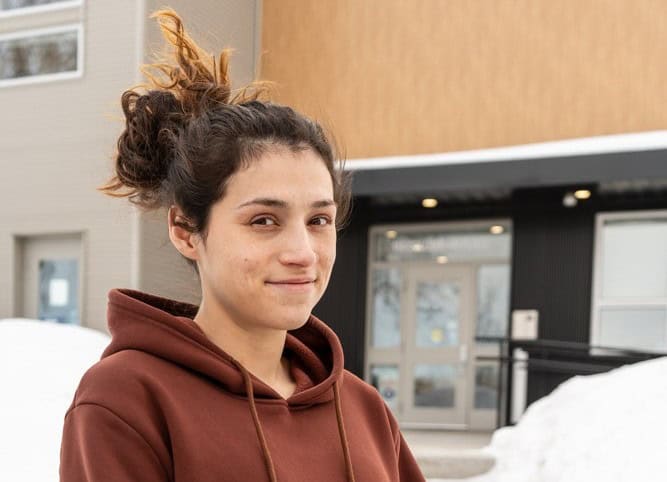
Louisa Simpson is building a brighter future with the help of the Saskatoon Tribal Council’s īkwēskīcik iskwēwak program.
Before joining the program, Louisa was caught in a cycle of addiction, poverty, and incarceration. She first learned about īkwēskīcik iskwēwak while serving a sentence in Pine Grove Correctional Center. The program provides up to 18 months of transitional housing and wraparound supports for women with a history of repeat incarceration for non-violent offences.
Her first attempt to join stalled when she had difficulty navigating the process of getting on provincial income support after her release. She soon fell back into addiction and was incarcerated again.
“It’s not like I just tried once and gave up — I tried again,” she said.
That persistence paid off. On her next attempt, Louisa was accepted and arrived at the facility in September of 2024.
Operated by STC in partnership with Saskatchewan’s Ministry of Corrections, Policing and Public Safety, the program has evolved to remove as many barriers as possible. Today, women can move into the facility while staff support them in accessing income assistance and other essential services.
“They just had to help guide me and keep me on the right path, where I could be somewhere clean and sober,” Louisa said.
After years of addiction and living on the streets, accepting help didn’t come easily.
“It was very scary coming here. I didn’t feel like I was worthy of it. I didn’t feel like I was good enough to deserve it,” she said.
Over time, the environment began to feel safer. Connecting with other women who shared similar experiences made a meaningful difference.
“Coming here, it’s kind of like a group of sisters,” she said. “That helps a lot.”
In contrast to her past experiences, where trust was rare, the program offered a supportive and welcoming space.
“Girls aren’t friends in the addiction world,” she said.
She also came to value the non-judgmental approach of staff, which made it easier to open up and work through her emotions.
“It’s like we’re protected in these four walls. We can do what we need to do here and not feel judged,” she said. “It made it a lot easier not to run back to the streets.”
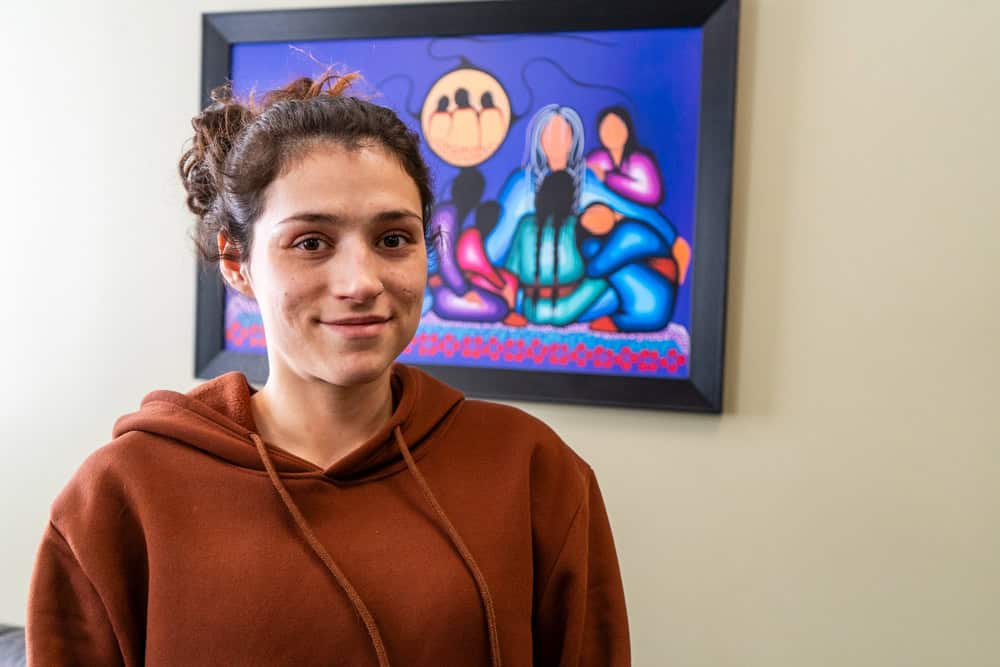
Alongside her recovery, Louisa has also begun exploring her identity. While her mother is First Nations, she did not grow up with a strong connection to that part of her background.
“I guess coming here, I’m trying to learn that,” she said. “I’m trying to figure out what I am.”
Cultural practices and values are woven throughout the program’s approach. Louisa has appreciated the opportunity to take part in smudging, round dances, and other activities in a way that feels calm and respectful.
“It’s like they’re giving me all these different choices, and being able to decide what I like and what I don’t is kind of nice,” she said.
Her journey hasn’t been without setbacks. While in the program, Louisa experienced a relapse — but the support around her remained constant.
“Eventually, it was like, ‘okay, I need to stop lying to them,’” she said. “And when I did ask for help, they were there. They gave me another chance.”
Through connections to other STC programs and community partners, Louisa was able to access addiction treatment, education, and job readiness supports. She has since earned her Grade 12 diploma, along with several certifications, including Workplace Hazardous Materials Information and food industry safety training.
While completing her education, she discovered a new interest in aircraft maintenance through a program offered by SIIT. She is now working through a preparatory course, with plans to enter the full two-year Aircraft Maintenance Engineering program.
“I like building stuff, and I like taking stuff apart,” she said. “I’m learning things, and I actually understand them. I’m not falling behind like I used to.”
Today, going to class is one of the things she enjoys most.
“That’s what excites me — I actually care about it now,” she said. “I want to be there.”
As she continues to build on her accomplishments, Louisa is focused on creating a stable, healthy future. She envisions a life grounded in sobriety, purpose, and independence where she can one day start a family of her own.
“I need to have a structured life, and I need to have savings and all these things to be able to have a kid,” she said. “And so first I just need to get all those steps done.”
As Louisa continues on her healing journey, she can move forward knowing īkwēskīcik iskwēwak and STC will be there to support her along the way.